
Building Materials
-
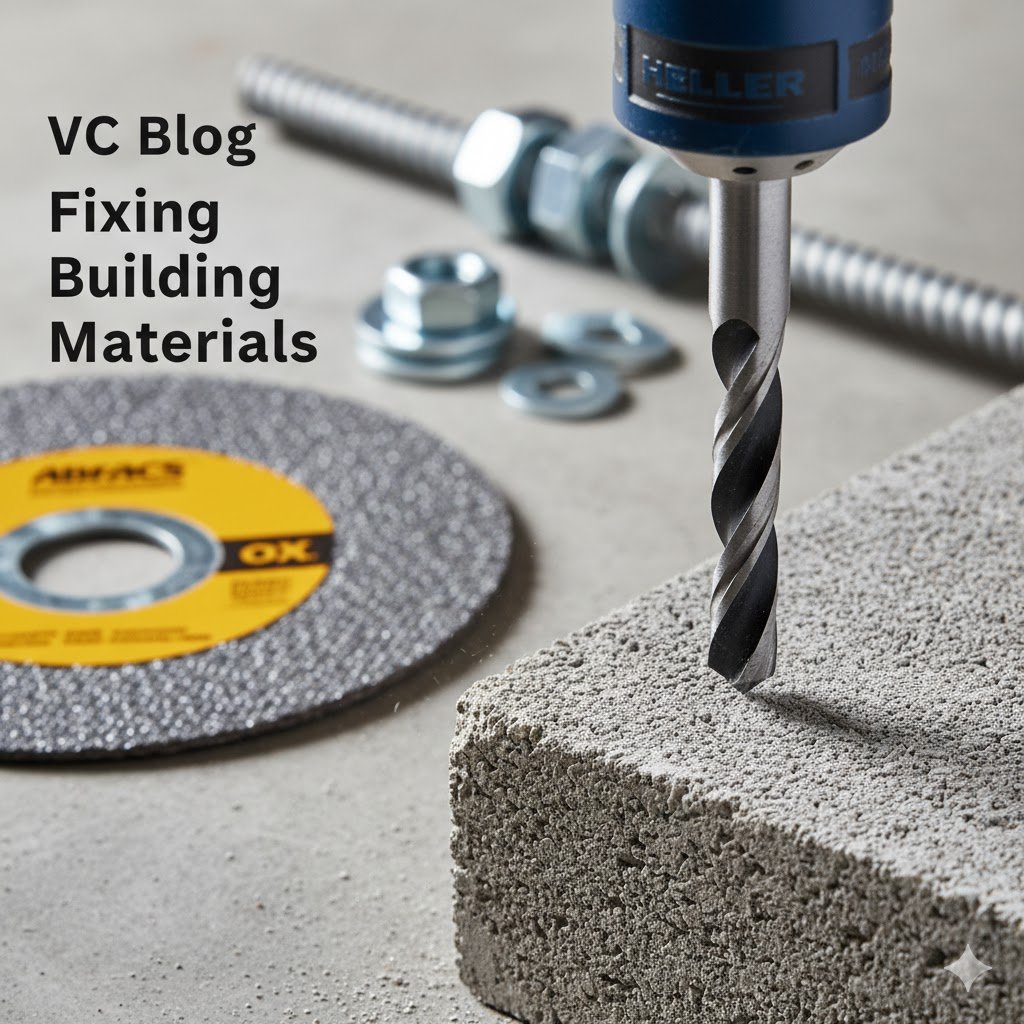
Built to Last: Why Quality Fixing Materials Are Your Best Investment
When it comes to construction and repair, many professionals and serious DIYers focus on the big-ticket items: the power tools, the machinery, and the large structural elements. But the truth is, the integrity of any project hinges on the smallest components—the fixing building materials.
If your business is built on quality, your projects must be too. Choosing reliable, high-performance anchors, fasteners, and cutting accessories isn’t just about making the job easier; it’s about guaranteeing the longevity and safety of the final structure.
🏡 Write-up on Building Insulation Materials
Insulation is a critical component in modern construction, playing a primary role in regulating temperature and managing energy efficiency within a building. By creating a barrier to heat transfer, insulation minimizes the energy required for heating and cooling, which dramatically reduces utility costs and lowers a structure’s carbon footprint.
What is Insulation?
Insulation works by slowing the rate at which heat moves through a material—either via conduction (direct contact), convection (air movement), or radiation (infrared waves). The effectiveness of an insulating material is measured by its R-value (thermal resistance), where a higher R-value indicates a better insulating capacity.
Common Types of Insulation
Different materials are used depending on the application (walls, floors, roof, etc.), budget, and desired R-value:
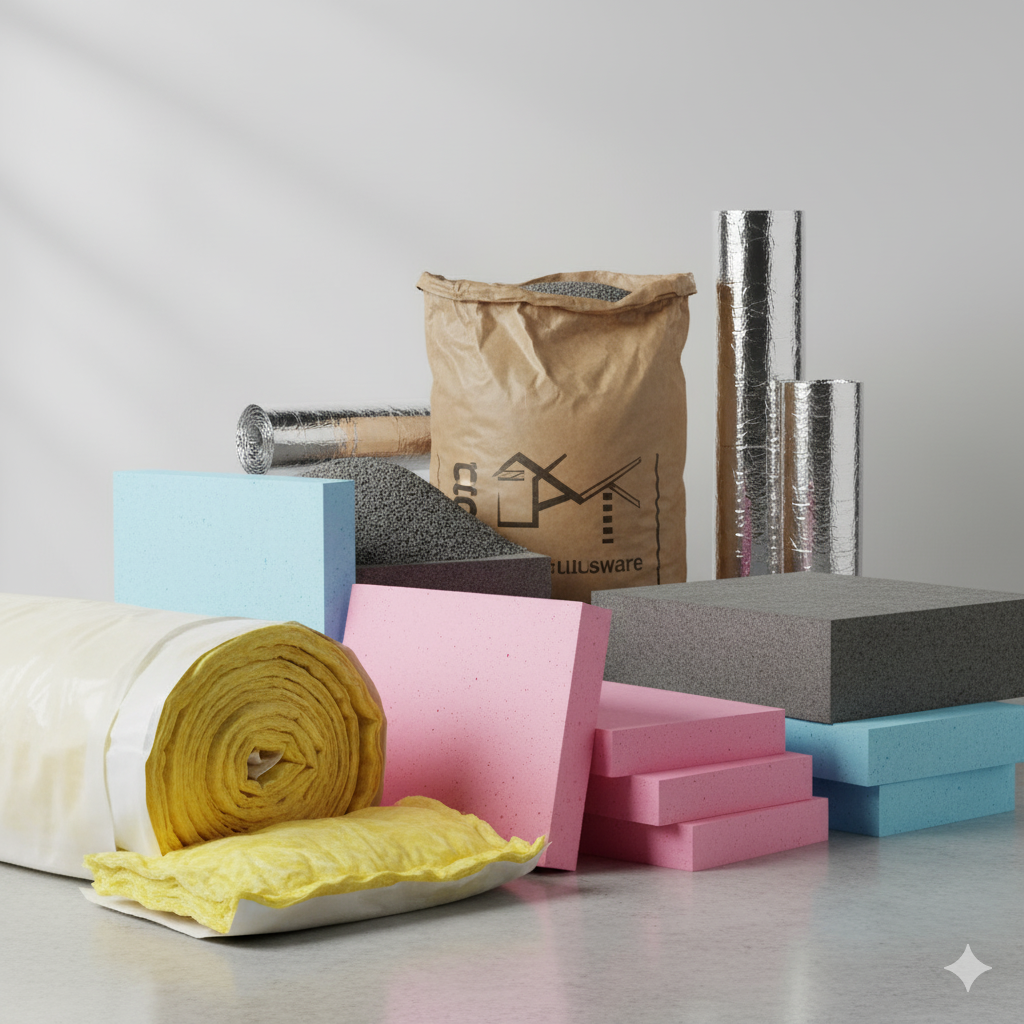
- Fiberglass Batts and Rolls:
- Description: The most common and cost-effective type, made of fine glass fibers. Available in pre-cut batts (for standard wall and ceiling cavities) and long rolls.
- Use: Typically installed between studs, joists, and rafters in new construction or accessible areas.
- Note: Requires careful handling and protection due to fibers.
- Mineral Wool (Rock Wool or Slag Wool):
- Description: Made from basalt rock or furnace slag. Offers good fire resistance and density.
- Use: Similar to fiberglass batts, but often used for soundproofing and in high-heat applications due to its non-combustible nature.
- Rigid Foam Boards (e.g., Polyisocyanurate, Extruded Polystyrene – XPS, Expanded Polystyrene – EPS):
- Description: Lightweight, strong, and available in large sheets. They offer a high R-value per inch compared to fibrous materials.
- Use: Commonly used for exterior wall sheathing, below-grade (foundation) applications, and cathedral ceilings. XPS often has a distinct blue or pink color, while Polyiso typically has foil facing.
- Spray Foam (e.g., Polyurethane):
- Description: Applied as a liquid that expands rapidly to fill cavities, cracks, and gaps, creating a superior air seal. Available in open-cell (lighter, softer) and closed-cell (denser, higher R-value, moisture resistant) forms.
- Use: Ideal for irregular spaces and retrofitting walls. Provides the best air-sealing properties.
- Loose-Fill or Blown-In Insulation (e.g., Cellulose, Fiberglass):
- Description: Small, fluffy particles blown into wall cavities, attics, or hard-to-reach areas using specialized equipment. Cellulose is often made from recycled paper treated for fire resistance.
- Use: Excellent for insulating existing walls without tearing them down (dense-packing) and for leveling out deep, uneven attics.
The Importance of Air Sealing
A crucial aspect of maximizing the effectiveness of any insulation is air sealing. Even the thickest insulation will perform poorly if outside air can leak through cracks around windows, electrical outlets, or where the wall meets the roof or foundation.
- Strategy: Combining good insulation (high R-value) with effective sealants (like the Soudal or Demsun products previously mentioned) ensures that the entire thermal envelope is protected against both heat transfer and air intrusion.
Would you like an image focusing on one specific type of insulation, like the Rigid Foam Boards or Spray Foam?
- Fiberglass Batts and Rolls:
-
Built to Last: Why Quality Fixing Materials Are Your Best Investment
When it comes to construction and repair, many professionals and serious DIYers focus on the big-ticket items: the power tools, the machinery, and the large structural elements. But the truth is, the integrity of any project hinges on the smallest components—the fixing building materials.
If your business is built on quality, your projects must be too. Choosing reliable, high-performance anchors, fasteners, and cutting accessories isn’t just about making the job easier; it’s about guaranteeing the longevity and safety of the final structure.
🏡 Write-up on Building Insulation Materials
Insulation is a critical component in modern construction, playing a primary role in regulating temperature and managing energy efficiency within a building. By creating a barrier to heat transfer, insulation minimizes the energy required for heating and cooling, which dramatically reduces utility costs and lowers a structure’s carbon footprint.
What is Insulation?
Insulation works by slowing the rate at which heat moves through a material—either via conduction (direct contact), convection (air movement), or radiation (infrared waves). The effectiveness of an insulating material is measured by its R-value (thermal resistance), where a higher R-value indicates a better insulating capacity.
Common Types of Insulation
Different materials are used depending on the application (walls, floors, roof, etc.), budget, and desired R-value:
- Fiberglass Batts and Rolls:
- Description: The most common and cost-effective type, made of fine glass fibers. Available in pre-cut batts (for standard wall and ceiling cavities) and long rolls.
- Use: Typically installed between studs, joists, and rafters in new construction or accessible areas.
- Note: Requires careful handling and protection due to fibers.
- Mineral Wool (Rock Wool or Slag Wool):
- Description: Made from basalt rock or furnace slag. Offers good fire resistance and density.
- Use: Similar to fiberglass batts, but often used for soundproofing and in high-heat applications due to its non-combustible nature.
- Rigid Foam Boards (e.g., Polyisocyanurate, Extruded Polystyrene – XPS, Expanded Polystyrene – EPS):
- Description: Lightweight, strong, and available in large sheets. They offer a high R-value per inch compared to fibrous materials.
- Use: Commonly used for exterior wall sheathing, below-grade (foundation) applications, and cathedral ceilings. XPS often has a distinct blue or pink color, while Polyiso typically has foil facing.
- Spray Foam (e.g., Polyurethane):
- Description: Applied as a liquid that expands rapidly to fill cavities, cracks, and gaps, creating a superior air seal. Available in open-cell (lighter, softer) and closed-cell (denser, higher R-value, moisture resistant) forms.
- Use: Ideal for irregular spaces and retrofitting walls. Provides the best air-sealing properties.
- Loose-Fill or Blown-In Insulation (e.g., Cellulose, Fiberglass):
- Description: Small, fluffy particles blown into wall cavities, attics, or hard-to-reach areas using specialized equipment. Cellulose is often made from recycled paper treated for fire resistance.
- Use: Excellent for insulating existing walls without tearing them down (dense-packing) and for leveling out deep, uneven attics.
The Importance of Air Sealing
A crucial aspect of maximizing the effectiveness of any insulation is air sealing. Even the thickest insulation will perform poorly if outside air can leak through cracks around windows, electrical outlets, or where the wall meets the roof or foundation.
- Strategy: Combining good insulation (high R-value) with effective sealants (like the Soudal or Demsun products previously mentioned) ensures that the entire thermal envelope is protected against both heat transfer and air intrusion.
Would you like an image focusing on one specific type of insulation, like the Rigid Foam Boards or Spray Foam?
- Fiberglass Batts and Rolls:
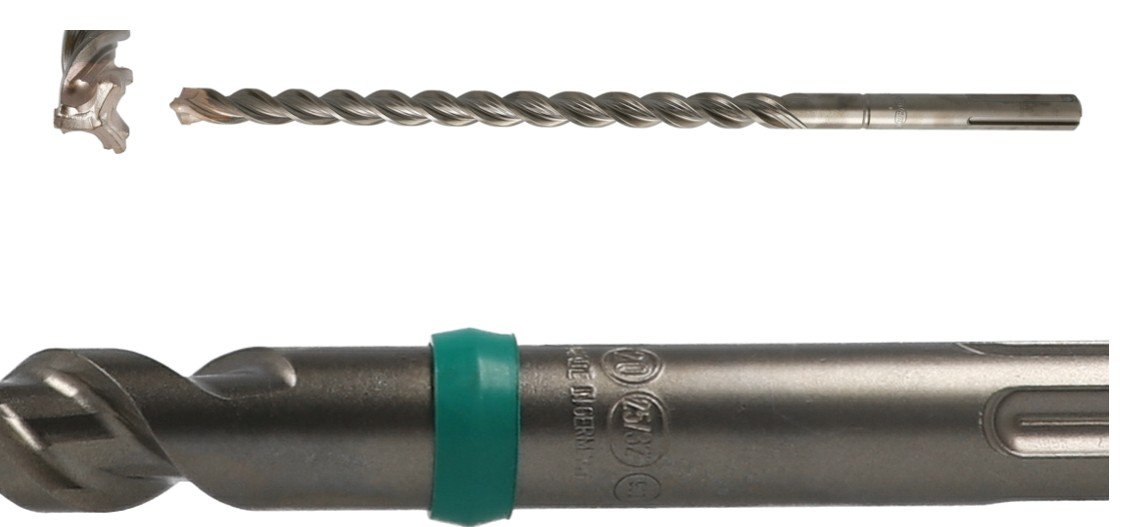
Shop Now
Explore our premium materials and elevate your projects today.